We can't find the internet
Attempting to reconnect

What Is Online Personal Training — and How Does It Actually Work?
You've decided you want to get fitter. You've heard people talk about online personal trainers, but you're not entirely sure what that actually means in practice. Does someone just email you a spreadsheet of exercises every Monday?
Online personal training gets lumped in with a lot of things it isn't — YouTube workout channels, fitness apps, subscription wellness platforms, generic "30-day challenges." It's none of those. But if you've never experienced it, the distinction isn't obvious.
By the end of this guide, you'll know exactly what online personal training involves, what a real session looks and feels like, roughly what it costs in the UK, and how to decide whether it's the right fit for you.
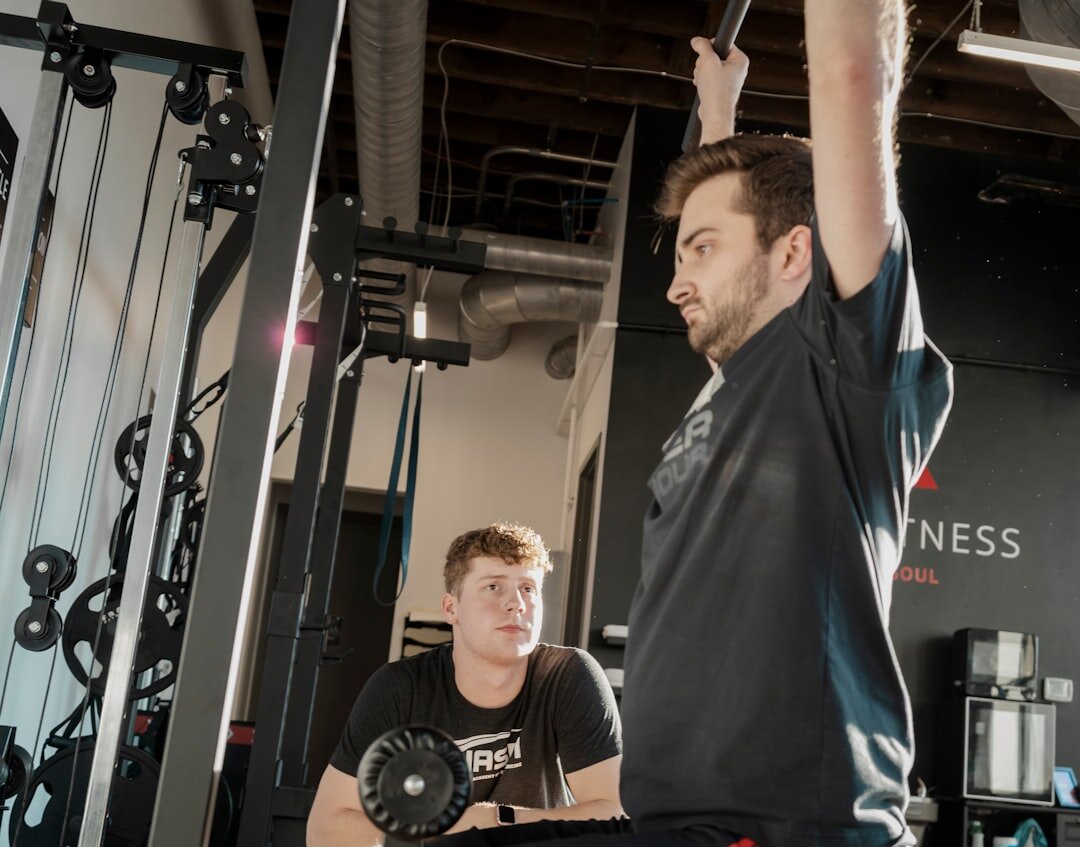 Photo by Crosby Hinze on Unsplash
TL;DR: What Is Online Personal Training? (Quick Answer)
- Online personal training is one-to-one coaching delivered remotely — a qualified personal trainer designs your programme and guides your sessions via video call, messaging app, or both.
- Sessions can be live (real-time coaching over video, where your trainer watches you move and adjusts in the moment) or async (you follow a custom programme independently and check in with your trainer between sessions).
- You don't need a gym — most sessions work in a living room, garden, or spare room with minimal or no equipment.
- It typically costs less than in-person PT in the UK, with online coaching programmes running roughly £80–£200 per month and live sessions available on a pay-per-session basis.src4
- The key difference from YouTube or fitness apps: everything is personalised to your body, your goals, and your schedule — not built for a general audience.
- Whether it suits you depends on your goals, your lifestyle, and how much live feedback you need — this article walks you through the honest version of that decision.
1. What Is Online Personal Training, Exactly?
Online personal training is a one-to-one coaching relationship between a qualified personal trainer and a client, conducted remotely — usually via video call, a dedicated coaching app, or a combination of both.
It is not the same as a YouTube fitness channel, where no trainer watches you, nothing is personalised, and the same session is designed for a general audience. It is not a fitness app like Peloton or Fiit, where the programming is algorithmic at best and no human coaches you through your movement or picks up when something goes wrong. And it is not a live group class over Zoom — where a trainer is technically present but cannot meaningfully watch your individual form or adapt the session to your specific history and needs.
Online PT means a real person who knows your injury history, your goals, your schedule, and your lifestyle. The programme they design — and how they run your sessions — is built specifically around you.
The phrase "online personal training" covers a spectrum of services, from monthly programme delivery with occasional WhatsApp check-ins at one end, through to live, real-time one-to-one coaching sessions over video call at the other. For a closer look at what online fitness coaching involves across that full spectrum, see the dedicated explainer.
2. How Does Online Personal Training Work? The Four Delivery Modes
Understanding what you're actually buying when you hire an online PT means understanding how different trainers structure their services. There are four main delivery models, and they vary significantly in how much real-time input you get.
Async programme delivery
Your trainer writes a weekly or monthly training programme tailored to your goals and the equipment you have available. You follow it in your own time and log your workouts — often via an app like TrueCoach or My PT Hub. The trainer reviews your logs and sends feedback periodically; adjustments happen between sessions rather than in real time.
This works well for self-motivated people with consistent schedules who primarily want structure and accountability rather than live coaching. The limitation: if your form is off or you hit a plateau, feedback is delayed. You train unsupervised between check-ins.
Check-in calls
Weekly or fortnightly video or voice calls — typically 20–30 minutes — where you and your trainer review the past week, adjust the programme, troubleshoot problems, and plan ahead. Often paired with async programme delivery as the human layer on top of the written plan. Some trainers use these calls to review short technique videos you've submitted.
App and messaging-based support
Ongoing communication through WhatsApp, a coaching app, or email: form-check videos, questions, nutrition guidance, motivational check-ins. Not a session type on its own — it's the connective tissue between the other modes. Depth and frequency vary widely by trainer, so it's worth asking before you sign up.
Live one-to-one online PT sessions
This is real-time coaching over video call — Zoom, FaceTime, or a dedicated PT platform — where your trainer watches you move, cues your technique, adjusts the session mid-rep, and responds to how you're actually feeling that day. It's the closest thing to in-person training in terms of feedback quality: the trainer sees your form, counts your reps, monitors your rest, and adapts load and pace live. For a full breakdown of what a live session involves from set-up to cool-down, see the dedicated guide.
Comparing your options at a glance
| Format | Real-time feedback | Personalisation | Typical UK cost | Best for |
|---|---|---|---|---|
| Live 1-to-1 online PT | Yes — trainer watches you in real time | Full (programme + in-session adjustments) | ~£35–£65 per session / £100–£250/mo src4 | People who want in-person quality without the commute or gym |
| Async online coaching | No — feedback comes between sessions | High (custom programme) but no live correction | ~£80–£200/mo src4 | Self-motivated people who primarily want structure |
| Live group online class | Partial — trainer present but not watching individuals | Low (one session for all) | ~£15–£40/mo subscription | Social exercisers who like class energy |
| In-person gym PT | Yes — trainer is in the room | Full | ~£35–£65/session nationally; £50–£100+/session in London src4 | People who need hands-on correction; those new to heavy lifting technique |
Cost data: Bark.com UK Personal Trainer Price Guide (2025); GymGuide.co.uk (2026). Ranges are approximate — regional variation is significant.
3. What Happens During a Live Online PT Session?
If you've never done a live online session before, it can be hard to picture what it actually looks like. Here's a step-by-step walkthrough of a typical session.
Before the session: getting set up (5 minutes)
You position your device — phone, laptop, or tablet — where your trainer can see your full body. Propped against a wall, on a chair, or on a phone stand all work fine. Your trainer joins the call and runs through the session plan: what you're working on today, any adjustments based on your last session, and what equipment you'll need.
Standard home broadband or 4G is sufficient. You're running a video call, not streaming 4K — the bandwidth requirement is roughly the same as a Zoom meeting.
Clear a few square metres of floor space. You need enough room to lie down, stand up, and extend your arms. That's the full requirement.
During the session: coaching and form correction
You warm up together, with your trainer leading or checking you through the warm-up. The main session follows the same structure as in-person PT: warm-up, main training block (resistance work, conditioning, or a mix depending on your programme), cool-down.
Throughout, your trainer cues your movement verbally in real time: "hips back," "chin tucked," "slower on the way down." If the camera angle means they can't see what they need to, they'll ask you to reposition. Experienced online PTs develop real skill in reading form through a camera — most report that camera angle and client positioning matter far more than people expect; once set up correctly, most common technique errors are clearly visible on screen.
The trainer logs your reps, notes your pace, and adjusts load mid-session based on how you're moving and how you're feeling. If you're having a low-energy day, a good trainer notices and scales accordingly.
A 2023 systematic review in the Journal of Medical Internet Research found that video-based exercise coaching with a health professional helps clients execute movements correctly and can reduce injury risk from poor form — supporting what experienced practitioners consistently report in practice.src2
After the session
Your trainer sends session notes: what you lifted, reps completed, technique observations, and focus areas for next time. Some trainers include short video clips demonstrating corrections or exercises to practise before the following session. A brief check-in the day after is common if fatigue or soreness is a concern.
4. What Do You Need to Get Started?
The equipment requirements for online PT are much lower than most people assume. Many effective sessions require nothing beyond a pair of trainers and a few metres of floor space.
The starter checklist
Essential:
- A device with a camera and screen — a smartphone propped against a wall works; a laptop or tablet gives a better view
- A stable internet connection — standard home broadband or 4G is sufficient
- Enough floor space to lie down and stand up — roughly the size of a yoga mat plus arm-width clearance on each side
- Comfortable exercise clothing you can move freely in
Optional but useful:
- A yoga mat (for comfort on hard floors)
- A set of resistance bands (£10–£20; significantly expands the range of exercises available)
- One pair of dumbbells or an adjustable dumbbell set
- A door-mounted pull-up bar (useful if upper body strength is a goal)
Not required:
- A gym membership
- A dedicated home gym space
- Any specialist equipment — unless your trainer and your specific goals call for it
Your trainer will work around what you have. A good online PT builds the programme to fit your space and kit — not the other way round.
5. Who Does Online Personal Training Work Well For?
Online PT is not for everyone, and saying so honestly is more useful than overselling it. Here's a straightforward way to think about whether it suits you.
Online PT tends to suit you if…
- You want one-to-one coaching but travel, childcare, work hours, or location make regular gym visits impractical or costly.
- You want to save money compared to in-person gym PT — even higher-end online PT typically costs less per session than mid-range in-person.
- You're nervous about exercising in a public gym environment — online PT removes that context entirely.
- You're comfortable working with a screen and don't need someone physically in the room to stay motivated.
- You have a reasonably clear goal (building fitness, losing weight, returning to exercise after a break or injury) that a trainer can structure a programme around.
- You're self-directed enough to follow through on sessions without someone physically standing over you.
You might prefer in-person if…
- You're completely new to exercise and genuinely worried about injury from incorrect form — in-person training allows hands-on correction for high-risk movements in a way that video cannot fully replicate.
- You know from experience that you need physical proximity to stay accountable — some people find it significantly harder to push themselves, or to show up at all, without a trainer in the room.
- Your goal involves highly technical loaded movements from scratch (Olympic lifts, heavy barbell work) where hands-on correction is difficult to replicate over video.
- You don't have a reliable internet connection or a private space to exercise at home.
- Social interaction at a gym is part of why you want PT in the first place.
The honest bottom line
Neither format is objectively better — it depends on your lifestyle, goals, and how you respond to accountability. For most people who want consistent, personalised coaching without the logistical constraints of a gym, online PT delivers comparable results — at a lower cost — for the majority of common fitness goals.
For comparing the two in detail, including a full breakdown of outcomes, cost, and suitability by goal type, see the in-depth comparison.
6. How Much Does Online Personal Training Cost in the UK?
Online PT in the UK ranges widely — so it's worth understanding what drives the price before you start searching.
The main pricing models
Monthly retainer (the most common model): A fixed monthly fee covering a set number of live sessions, a custom programme, and ongoing support between sessions. Typical range: £100–£250 per month depending on the trainer's experience, session frequency, and level of between-session contact.src4
Pay-per-session: You pay only for the sessions you book, with no subscription or minimum commitment. Typical range: £35–£65 per live session nationally, based on UK platform data.src4 Bark.com's data puts the UK average at around £40 per hour, with a range of £25 to over £100 depending on trainer credentials and location.
Programme-only packages: A one-off programme design fee — often £50–£150 — with no ongoing live coaching. The lowest-cost option, and also the lowest support level.
What drives the price up or down
Higher prices generally reflect: more experienced or specialist trainers, greater session frequency, daily rather than weekly check-ins, and live over async delivery.
Lower prices often reflect: async-only delivery, less experienced trainers (still qualified), lower session frequency, or platforms that let you book individual sessions rather than locking into a package.
How does it compare to in-person?
In-person gym PT in the UK typically costs £35–£65 per session nationally, with London pricing noticeably higher.src4 Two live online sessions per week at £50 per session comes to £400 per month — which is often still less than the equivalent frequency of in-person training at a London gym.
For a full cost breakdown for online PT in the UK, including how to evaluate value for money at different price points, see the dedicated cost guide.
7. Is Online Personal Training Actually Effective?
It's a fair question to ask. Can someone watching you through a small screen actually make a meaningful difference to your training?
On accountability and adherence
One of the most consistent findings in exercise science is that being coached significantly improves adherence compared to training alone. Research from the Norwegian School of Sport Sciences found that novice exercisers supervised by a personal trainer showed significantly higher adherence over 12 weeks than those who trained alone.src1 The mechanism is both psychological — you're less likely to skip a session you've paid for and booked with a real person — and practical: someone notices if you miss a session and follows up.
The format of the coaching (online or in-person) matters far less than whether you actually show up consistently. Online PT's flexibility advantage — no commute, no gym hours, no childcare logistics — makes consistent attendance more achievable for many people. Research consistently shows that coached exercise leads to better adherence; whether it happens in person or over video call is a secondary consideration.
On form correction over video
This is the most common objection. The honest answer is that for most exercises, experienced online PTs can see what they need to see — provided the camera is positioned well. The limitations are real but manageable: most technique errors that matter are visible on a standard smartphone camera at the right angle.
What's genuinely harder to replicate via video: corrections requiring physical contact — manually repositioning spine alignment, shoulder blade placement, hip position under heavy load. High-risk loaded movements with a complete beginner carry more inherent risk online than in-person, and that's worth acknowledging directly.
For most resistance training, bodyweight work, and conditioning sessions, the evidence supports video-based coaching as an effective delivery method.src2 A systematic review on remote physiotherapy — a closely related field — found that video-based coaching produces comparable satisfaction and similar or better attendance and adherence when compared to in-person modes.
On outcomes more broadly
The UK personal training market grew from approximately £626 million in 2020 to £768 million in 2023, reflecting a sustained shift towards flexible, remote-delivered coaching.src3 For goals like fat loss, general fitness, and muscle building, the evidence is consistent: coached exercise outperforms uncoached — and the convenience of online delivery makes consistency more achievable for more people.
For a detailed assessment of whether online PT is worth it for your specific goals, including what to expect at different price points and timelines, see the full breakdown.
8. How to Choose an Online Personal Trainer Trainer
Knowing what to look for makes it much easier to filter out the noise when you're searching.
Qualifications to check
Level 3 Personal Trainer qualification (regulated by Ofqual under the Regulated Qualifications Framework, or RQF) — the standard entry-level PT qualification in the UK. Not holding this is a red flag.
Level 4 qualifications for specialist areas: sports nutrition, back rehabilitation, GP referral — relevant if your goals involve a specific condition, injury history, or sport.
CIMSPA registration (Chartered Institute for the Management of Sport and Physical Activity) — the UK's professional body for fitness. CIMSPA-registered trainers are held to a code of conduct and standards of practice.
Professional insurance — any trainer taking paying clients should hold professional indemnity and public liability insurance. It's worth asking directly before you book.
Questions to ask before your first session
- What is your approach for someone with my specific goals?
- Will sessions be live or async — and what platform will we use?
- How often will we communicate outside sessions?
- Can you walk me through what a typical week looks like for a client?
- What happens if I need to cancel or reschedule?
Signs of a good fit
A good online PT asks detailed questions about your goals, health history, injury history, and lifestyle before writing a programme. They don't promise specific results in unrealistic timeframes. Communication is clear and responsive. And you can find reviews or testimonials from clients with similar goals to yours — not just general five-star ratings.
9. Is Online Personal Training Right for Me? A Decision Framework
Rather than a generic "it depends," here is a structured way to work through the decision.
Choose online PT if you answer yes to most of these
- I have a smartphone, laptop, or tablet with a working camera.
- I have a space where I can exercise in private — at home, in a garden, or outdoors.
- I want one-to-one attention, but my schedule or location makes regular gym visits impractical more than once a week.
- I've exercised before and have a basic sense of how to move safely — I'm not a complete beginner to all physical activity.
- I want to save money compared to in-person PT without giving up personalised coaching.
- I'm willing to show a trainer a video of my technique, knowing they'll use it to help me improve.
Consider in-person PT if you answer yes to most of these
- I've never exercised before and I'm genuinely worried about hurting myself — I want someone physically in the room during my first few months.
- I know from experience that I struggle to stay motivated without physical presence — I've cancelled home workouts before when no one was watching.
- I want to start lifting heavy barbells from scratch and have no prior technique foundation.
- I don't have a private space to work out at home, and I want gym access as part of the package.
The hybrid option
Some people use online PT for most sessions — cheaper, more flexible, no commute — and book occasional in-person check-ins for technique audits or when moving into a new training phase. This approach is increasingly common and worth asking about if flexibility and cost are both priorities.
10. Getting Started: What to Do Next
If you're ready to move from research mode to action, here's a clear sequence.
- Define your goal before you search. Know whether you want fat loss, muscle building, general fitness, or something more specific. A trainer will ask immediately, and a clear answer helps both of you assess fit quickly.
- Set a realistic budget and choose a model. Monthly retainer or pay-per-session? Live or async? Knowing this narrows your search significantly.
- Check qualifications first. Filter for Level 3 PT minimum. Look for CIMSPA registration. A high social media following is not a substitute for credentials.
- Read reviews from clients with similar goals. A trainer who specialises in marathon prep may not be the right fit for postnatal fitness recovery. Specific, goal-relevant reviews carry more weight than volume of five-star ratings.
- Book a free consultation. Most trainers offer an initial call. Ask about their approach, what a typical week looks like for a client, and how they handle form correction remotely.
- Try a single session before committing to a package. One live session tells you more about fit than any amount of profile browsing. You'll know within 45 minutes whether the trainer watches you carefully, cues your technique, and makes you work harder than you would alone.
- Review the first session honestly. Did the trainer watch you carefully and adjust what wasn't working? Did you push harder than you would have alone? If yes to both, you've found a good match.
- Give it four weeks before you judge. Consistency over four weeks is enough to know whether online PT is delivering what you need: progress tracking, real accountability, and a clearer sense of what training works for your body.
11. Live Online PT with Gymbile
If you've read this far, you now have a clear picture of what online personal training is — and in particular what live, real-time one-to-one coaching looks like compared to async programme delivery.
Gymbile is a UK platform built specifically for live online PT sessions. There's no monthly subscription and no lock-in: you browse qualified UK-based personal trainers, view their specialisms and client reviews, and book a single session when you want one. Every session is real-time — your trainer watches you move, corrects your form, and adapts the session live — so you get the accountability and feedback quality of in-person coaching without the commute, the gym environment, or the rigid schedule.
If live one-to-one online PT sounds like the right fit after reading this, the next step is straightforward: see how Gymbile's live sessions work , or browse available trainers and book your first session.
-
↩
Gjestvang C, Abrahamsen F, Stensrud T, Haakstad LAH. "What Makes Individuals Stick to Their Exercise Regime? A One-Year Follow-Up Study Among Novice Exercisers in a Fitness Club Setting." Frontiers in Psychology, 28 May 2021. doi: 10.3389/fpsyg.2021.638928. Norwegian School of Sport Sciences. "Higher exercise adherence was found in participants conducting a 12-week resistance exercise program with supervision from a personal trainer, compared with those exercising individually."
-
↩
"The Effectiveness of Digital Apps Providing Personalized Exercise Videos: Systematic Review With Meta-Analysis." Journal of Medical Internet Research, 2023, e45207. "Digital apps that allow personalized exercise programs prescribed by a health professional and accessible in video form can help promote faithful execution of exercises." Additional corroboration: real-time video telerehabilitation systematic review, Journal of Science and Medicine in Sport (ScienceDirect, 2024): comparable or better satisfaction and attendance vs. in-person physiotherapy.
-
↩
IBISWorld data via Statista (October 2024): UK personal training market estimated at £768 million in 2023, up from £626 million in 2020 (Educate Fitness / industry reports).
-
↩
Bark.com UK Personal Trainer Price Guide (2025): average in-person PT cost £40/hour, range £25–£100+. GymGuide.co.uk Complete Guide to Personal Trainer Costs in the UK (2026): in-person PT £35–£65/session; online coaching plans £80–£200/month; specialist/experienced PTs £70–£120+. All figures are approximate ranges — regional variation (particularly London vs. rest of UK) is significant.
Share this article
In this article
⚡ For Trainers
Start taking live sessions — with zero monthly fees.
- ✓ Set your own rates
- ✓ Clients book & pay instantly
- ✓ £0 platform subscription
- ✓ 100+ countries
No credit card required to get started.
Become a Trainer →⚡ For Trainers
Start taking live sessions — with zero monthly fees.
- ✓ Set your own rates
- ✓ Clients book & pay instantly
- ✓ £0 platform subscription
- ✓ 100+ countries
No credit card required to get started.
Become a Trainer →Keep Reading
 Personal Story
You Can Wait Six Months for Physiotherapy. By Then, It Hurts Somewhere Else.
Waiting-list patients arrive months late, in pain somewhere new. A physiotherapist on what to do while you wait - and why your knee is rarely the real problem.

Workout Accountability: How Partners, Apps and Coaches Keep You on Track
Not sure whether a gym buddy, fitness app or accountability coach is right for you? Compare every option and find what finally makes your workouts stick.

How to Start an Online Fitness Coaching Business: A Practical Guide
A practical, UK-focused guide to starting an online fitness coaching business: choosing your model, UK legal requirements, tools, pricing, and getting your first clients.
Comments
Be the first to join the conversation
Sign in to share your thoughts on this article.
Sign in to comment