We can't find the internet
Attempting to reconnect

Home Workouts Without a Gym: A Practical Guide to Training at Home
If you've searched this topic before, you've probably been served a list of thirty exercises and a promise that twenty minutes a day will change your life. This isn't that.
You've likely tried home workouts before. They worked for a bit, then stopped — or you stopped. That's not a willpower problem. There are specific structural reasons home training fails, and once you understand them, fixing it becomes a practical problem rather than a personal one. This guide gives you that framework.
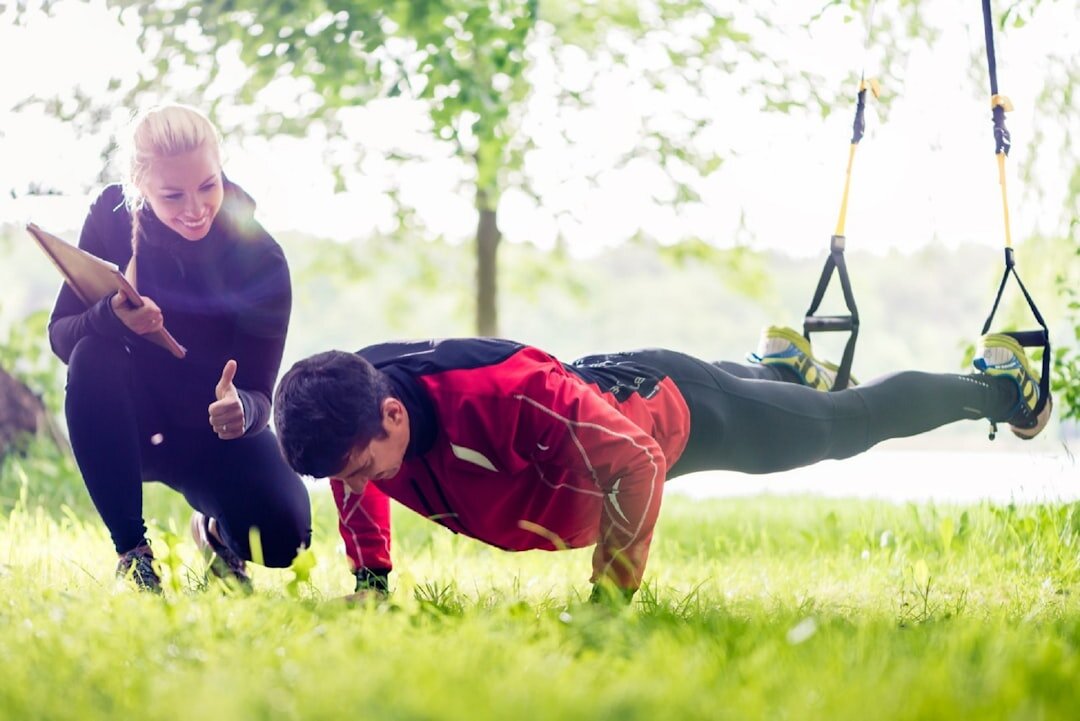 Photo by lawrence wilcox on Unsplash
Can you actually get real results training at home?
Yes — but let's be specific about what that means.
Research shows that bodyweight training builds genuine muscular strength and cardiovascular fitness. A 2023 study published in NCBI found meaningful strength and hypertrophy gains from resistance exercise without external load, provided the training followed sound principles. That matters, because there's still a lot of scepticism about whether home training is "real" training.
The honest answer is that most 25–45-year-old adults — people looking to get fitter, stronger, and more consistent — have not come close to exhausting what bodyweight training can do. You don't hit a ceiling quickly. You hit it because structure breaks down, not because the method runs out.
Studies suggest over half of people who begin a home exercise programme drop out within six months. The issue is rarely the training itself. It's the conditions around it.
What home training can and can't do
Home training without equipment is well suited to building functional strength, improving fitness, managing weight, and supporting mental health — as the NHS notes, regular exercise has a well-evidenced effect on stress, sleep, and mood.
Where it has limits: if your goal is competitive powerlifting or heavy barbell work, you'll eventually need equipment. For most people reading this, that constraint is a long way off. Build the habit first. The ceiling comes later.
Why most home workouts stop working (and it's not willpower)
Sport England's latest Active Lives data shows that a large proportion of UK adults want to be more active but aren't. The gap between intention and action is rarely about wanting it enough. There are three specific things missing from most home workout attempts.
No progressive plan. Sessions feel productive but stay the same week after week.
No feedback on form. You're doing the movement, but no one tells you whether you're doing it well. Small errors compound.
No accountability structure. There's no appointment, no trainer waiting, no social commitment. Everything depends on willpower at the moment you need to start.
Research consistently links accountability to exercise adherence. And evidence confirms that progressive overload — the gradual increase in training demand — is the key driver of ongoing physical adaptation. Remove either one and progress stalls, regardless of effort.
The progression problem
Progressive overload means making your sessions incrementally harder over time. You don't need to add weight to do this — but you do need to do something differently.
If you're doing three sets of ten press-ups every session for six weeks, you're not training. You're maintaining. Your body adapted after week two. The remaining four weeks are maintenance at best. This is one of the most common reasons home workouts plateau — not because the method failed, but because the plan didn't progress.
The accountability gap
Motivation is not a reliable resource. It varies with sleep, stress, weather, and how your day went. A booked class, a trainer who's expecting you, or a committed training partner creates an external trigger that doesn't depend on how motivated you feel on a given Tuesday evening.
That kind of structure is entirely achievable without a gym. But you need to design it deliberately — it won't appear on its own.
What a structured home workout routine actually looks like
Structure doesn't have to be complicated. Three sessions per week, built around fundamental movement patterns, is enough to make consistent progress — provided each session follows a basic format and the plan progresses over time.
A session structure looks like this:
- Warm-up (5–10 minutes): raise your heart rate, mobilise the joints you're about to use
- Main work (25–35 minutes): the training block
- Cool-down (5 minutes): bring your heart rate down, light stretching
Your main work should cover the five movement categories that make up a balanced programme: push (press-ups, pike press), pull (rows using a table edge or rings), hinge (hip hinges, single-leg deadlifts), squat (bodyweight squat, Bulgarian split squat), and core (planks, dead bugs, hollow holds).
Covering all five across your weekly sessions means you're training your body as a system, not just the bits you can see.
A realistic week for someone starting out
Here's a simple three-day structure for a beginner, no equipment required:
Day 1 — Push and core: press-up variations, pike press, plank holds, dead bugs
Day 2 — Squat and hinge: bodyweight squats, reverse lunges, hip hinges, glute bridges
Day 3 — Pull and core: table rows or band rows, face pulls with a band, side plank, hollow holds
Rest at least one day between sessions. If you're new to training, two rest days between sessions is fine. For a full breakdown of how to structure each session as a beginner, see our [beginner home workout plan].
How to make sessions harder over time
Without weights, progression works differently — but it still works. Your options include:
- More reps or sets: move from 3×8 to 3×12 before changing the exercise
- Slower tempo: a four-second lowering phase makes a press-up significantly harder
- Reduced rest: less recovery time between sets increases cardiovascular demand
- Harder variations: press-up → close-grip press-up → archer press-up → decline press-up
The principle is the same as adding weight in a gym: make the stimulus harder so your body continues to adapt. You just achieve it differently.
Do you need any equipment?
No — not to start, and not for a long time.
Fitness organisations including ACE note that bodyweight training provides sufficient resistance for meaningful strength and conditioning gains, particularly for people who are earlier in their training history. Your own bodyweight, used intelligently, is enough to build real fitness.
That said, a small investment does extend your options:
- Resistance bands (around £10–£20): add load to lower body work, make pull movements accessible without a bar
- A doorframe pull-up bar (around £20–£30): opens up vertical pulling patterns that are difficult to replicate otherwise
Neither is necessary to begin. If you start and find you're progressing well, a pull-up bar is probably the single most useful piece of home kit you can add. For a full rundown of what's worth buying and what isn't, see our [home workout equipment guide].
How training with an online PT compares to going to the gym
When you train at a gym, you get access to heavy equipment, a defined training environment, and a degree of social accountability from being around other people exercising. Those are real advantages.
What you give up is flexibility. You need to commute, work around opening hours, pay a membership whether you use it or not, and exercise in a space that doesn't belong to you.
Home training flips that trade-off. Your space, your time, no contract. What it has historically lacked is the coaching layer — someone who can write your programme, watch you work, and tell you in real time whether your form is right.
A 2024 randomised trial found live virtual training produced comparable improvements in body composition and fitness to in-person training. The method works. The question is whether you have the structure around it.
What a live online PT session actually involves
A live online PT session is a video call — your trainer watches you train in real time, just as they would if you were standing next to them in a gym. They cue your technique as you're moving, adjust the session based on how you're responding, and track your progress over time.
This is not a pre-recorded class. The trainer is watching you specifically, responding to what they see. If your squat depth is off or your hips are drifting in a plank, they'll tell you mid-rep. For more on what to expect, see our guide on [how online personal training works].
How to stay consistent when you're training alone
Consistency is the variable that determines results more than any other. These practical measures help:
Fix your session times in advance. Deciding when to train in the moment means that decision competes with everything else happening that day. Scheduled sessions don't.
Create a dedicated space. It doesn't need to be large. A cleared area of floor in a bedroom is enough. A fixed space reduces the mental friction of starting.
Tell someone your plan. This is a low-friction version of accountability — not a trainer, just a person who knows what you've committed to.
Track your sessions. A simple log — exercise, sets, reps — gives you objective evidence of progress. Progress is motivating. A blank log is not.
These measures help. But they all still rely on internal motivation. As the NHS notes, regular exercise has significant benefits for mental wellbeing — which in turn makes it easier to stay consistent. The challenge is that external accountability, by removing the need for internal motivation to carry everything, is simply more reliable.
Ready to train at home with a real PT?
Home workouts work. The evidence for that is clear. But they work when they have three things: a structured progressive plan, feedback on how you're moving, and a reason to show up beyond how you feel on a given day.
Most people who try home training don't fail because they're lazy or undisciplined. They fail because at least one of those three things was missing.
Gymbile connects you with live, qualified personal trainers who work with you via video call — from your living room, your garden, or wherever you train. Your programme is built for your space and your goals. Your trainer watches you work in real time. There's no gym contract and no commute.
You've got the space. We'll bring the trainer.
Browse trainers on Gymbile and book a first session when you're ready. No commitment required to take a look.
Frequently asked questions
Can you build muscle with home workouts and no equipment?
Yes. Research published in peer-reviewed journals confirms that bodyweight resistance training builds muscular strength and size, provided the training includes progressive overload — making sessions incrementally harder over time. Results won't match heavy barbell training, but for most adults seeking general fitness, bodyweight training is more than sufficient to make meaningful progress.
How many days a week should you work out at home?
Three sessions per week is a solid starting point for most adults. That frequency is enough to drive consistent progress while allowing adequate recovery. If you're new to training, two sessions per week is a reasonable entry point. What matters more than frequency is consistency over weeks and months, not how many sessions you fit into any single week.
Why do home workouts stop working?
Usually because one of three things breaks down: the plan stops progressing (so your body has no reason to adapt), there's no feedback on whether you're performing exercises correctly, or the accountability structure — whatever was getting you to start each session — disappears. Studies suggest over half of people who start home exercise programmes drop out within six months, and the cause is almost always structural rather than motivational.
What is an online personal trainer and how does it work? Trainer
An online personal trainer coaches you remotely, typically via video call. In a live session, your trainer watches you train in real time — exactly as they would in person — providing technique cues, adjusting the session as needed, and tracking your progress over time. It differs from a pre-recorded class in that the coaching is responsive and specific to you. A 2024 randomised trial found live virtual training produced comparable results to in-person training.
Do I need equipment for a home workout routine?
No. Bodyweight training alone is sufficient to build meaningful fitness, particularly if you're earlier in your training history. Fitness organisations including ACE confirm that bodyweight resistance provides enough stimulus for strength and conditioning gains without any additional equipment. Resistance bands and a pull-up bar are useful additions once you've built a consistent routine — they extend your exercise options and prevent plateauing — but neither is necessary to get started.
Share this article
In this article
⚡ For Trainers
Start taking live sessions — with zero monthly fees.
- ✓ Set your own rates
- ✓ Clients book & pay instantly
- ✓ £0 platform subscription
- ✓ 100+ countries
No credit card required to get started.
Become a Trainer →⚡ For Trainers
Start taking live sessions — with zero monthly fees.
- ✓ Set your own rates
- ✓ Clients book & pay instantly
- ✓ £0 platform subscription
- ✓ 100+ countries
No credit card required to get started.
Become a Trainer →Keep Reading
 Personal Story
You Can Wait Six Months for Physiotherapy. By Then, It Hurts Somewhere Else.
Waiting-list patients arrive months late, in pain somewhere new. A physiotherapist on what to do while you wait - and why your knee is rarely the real problem.

Workout Accountability: How Partners, Apps and Coaches Keep You on Track
Not sure whether a gym buddy, fitness app or accountability coach is right for you? Compare every option and find what finally makes your workouts stick.

What Is Online Personal Training — and How Does It Actually Work?
New to online PT? We explain what online fitness coaching is, how live sessions work, and whether it could suit your lifestyle. No jargon — just honest answers.
Comments
Be the first to join the conversation
Sign in to share your thoughts on this article.
Sign in to comment