We can't find the internet
Attempting to reconnect

Social Media for Personal Trainers: What to Post When You Have No Time
Your current clients found you somehow. A referral, a chance conversation, a flyer at the gym. But right now, someone in your area is scrolling Instagram looking for exactly what you offer — and if you're not showing up there, someone less qualified is. A solid personal trainer marketing strategy doesn't require you to become an influencer. It requires you to be findable and trustworthy in a small radius. That's a different job, and a much more achievable one.
TL;DR
- You don't need a large following. Local trust and real enquiries beat follower counts every time.
- Pick the one platform your target clients already use — not whichever one went viral last month.
- Rotate five content categories: client results, quick education, behind-the-scenes, direct offers, and personal story.
- Post 3–4 times per week, batched in a single 30-minute session — not daily.1
- Engagement (replies, DMs, story polls) converts better than passive broadcasting.
- Track new enquiries and DM conversations, not likes.
- A boring, repeatable system outlasts an ambitious plan abandoned in week two.
What to Post: 5 Categories That Cover Everything
You don't need infinite content ideas. You need five buckets and a rotation you can run on autopilot.
Category 1 — Client Results. A transformation post, a milestone check-in, a two-sentence testimonial quote. This is your proof. Nothing else builds social credibility in fitness the way real results do — nearly half of consumers say they trust the opinions of strangers online as much as people they know personally.2 One result post per week is enough.
Category 2 — Quick Education. One tip. A myth bust. A form cue explained in a single slide. This positions you as the expert, not just someone who counts reps. Keep it tight — three sentences or a ten-second clip works better than a lecture.
Category 3 — Behind the Scenes. Your own training session. Setting up for an outdoor client. A moment from your day. This is the category most PTs skip, which is exactly why it works — it makes you a person, not a service provider. Trust compounds here faster than anywhere else.
Category 4 — Direct Offers. Availability for new clients, a package promo, a free consult invite. Post these without apology. Once a week is not too often. The people who are ready to hire you need to see it; the people who aren't will scroll past.
Category 5 — Personal Story. Why you became a PT. A training setback you overcame. A belief you hold about what good coaching looks like. This is your differentiator. Faceless content farms can replicate tips, but they can't replicate your story.
A simple weekly rotation: two education posts, one results post, one behind-the-scenes or personal story, plus one offer. That's five posts and a coherent feed.
A note on before/after posts and client consent
Always get written consent before posting a client's image, weight, or measurable result. Written — not a verbal nod in the gym. Frame results posts around the client's effort and journey, not just the physical change. It protects you professionally and, frankly, makes for better content.
Which Platform Should You Actually Use?
One platform done well beats three done poorly. The question isn't which platform is biggest — it's where your specific target clients already spend time. Pick that one and ignore the rest until it's working.
Platform Comparison
| Platform | Best client type | Primary format | Time investment | Local vs. online reach | Good for beginners? |
|---|---|---|---|---|---|
| Millennials and younger urban adults | Reels, Stories, carousels | Medium–high | Mixed (local + online) | Yes — if targeting 25–403 | |
| 30–55 local adults | Text + photos, Groups | Low–medium | Strong local | Yes — especially for in-person PTs4 | |
| TikTok | 18–34 discovery audience | Short video only | High (editing) | Primarily national/online | No — steep learning curve5 |
| Corporate wellness, B2B | Text + articles | Low | Professional niche | Yes — if targeting office workers |
Instagram's largest demographic worldwide is 25–34, followed closely by 18–24.3 If you train working adults in that range, it's the obvious starting point. Facebook reaches 80% of US adults aged 30–494 — a statistic that surprises most PTs who've written it off as their parents' platform. TikTok skews 18–345 and drives genuine discovery, but it rewards high video volume and editing skill. For most solo PTs just building consistency, that's a cost-benefit problem.
Profile basics worth getting right
Your bio: who you help, where you're based, one CTA. Your profile photo: your face, not a logo. Your link: straight to a booking page or free consult form — not your homepage. Pinned posts or highlights: social proof, services overview, how to work with you. These don't take long to fix and they do most of the heavy lifting before anyone reads a single post.
How Often Should You Post?
Three to four times per week. Not daily.1
The idea that posting more always means more reach is a media-brand assumption. You are a local service business. The algorithm rewards consistency and engagement, not volume — and daily posting on a solo PT schedule almost always means quality drops, which tanks both reach and trust.
Three good posts per week for twelve weeks will outperform fourteen posts per week for two weeks, then silence. The math on that isn't close.
And no, you don't need 10,000 followers to book your next client. You need the right ten people in your area to see your posts and think: this person knows what they're doing. That's a realistic goal in 90 days of consistent posting.
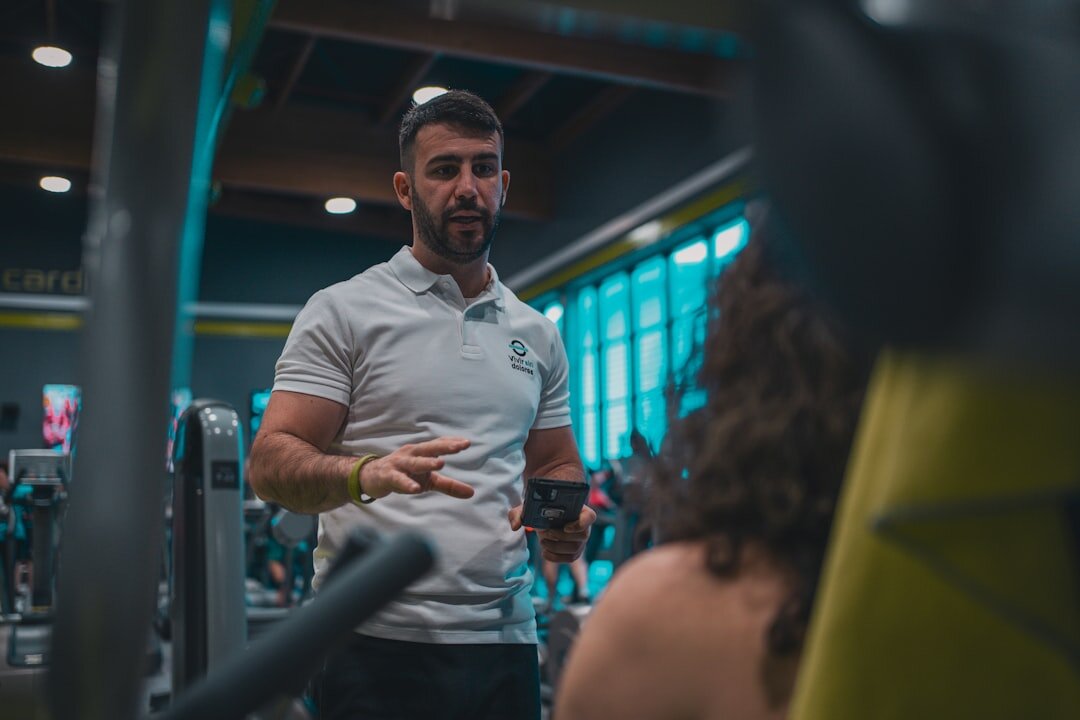
Your 30-Minute Weekly Social Media System
This is the part where most advice falls apart — because "be consistent" without a system is just guilt. Here's a repeatable workflow that fits inside a Sunday evening or Monday morning.
- Block the time. Treat it as a client appointment. Same day, same time each week. Non-negotiable.
- Decide your four posts. One education, one results or BTS, one personal story or secondary education, one offer. Done.
- Write captions first — 10 minutes. Hook line, one value point, one CTA. Simple template, repeated every week with different content.
- Gather visuals — 10 minutes. Existing session photos, a screen-recorded tip, a text card. You don't need new footage every week.
- Schedule all four posts — 5 minutes. Native schedulers (Meta Business Suite, TikTok Scheduler) are free and reliable. Use them.
- Reply to last week's comments and DMs — 5 minutes. This is where actual conversions happen. Passive posting won't book clients; conversations will.
- Log one number. How many new enquiries or DM threads started this week. That's your metric.
If caption writing is slowing you down, AI marketing tools for personal trainers can draft copy from a bullet list in under a minute — worth reading if you want to cut the batch session down further.
How to Know If It's Actually Working
Forget follower count. Forget likes. Seriously.
The metrics that tell you social media is doing its job for a PT business: DM enquiries per week, profile visits from non-followers (discovery traffic), click-throughs to your booking link, and new consultations booked. Write those numbers down once a week in a notes app. That's your dashboard.
One more thing: give it time. Meaningful enquiry data from social media takes eight to twelve weeks of consistent posting to emerge. If you quit at week three because the likes are low, you're measuring the wrong thing at the wrong moment. Stick to the cadence, track the right numbers, and reassess at the 12-week mark — not before.
If you've posted 3–4 times a week for twelve weeks and received zero new enquiries, that's signal worth acting on: try a different platform, a different content mix, or get a second opinion on your profile and bio.
Make Your Marketing Time Count
Social media starts the conversation. The conversion happens in the DM — and then immediately after, when someone tries to book a session. If that step is clunky (back-and-forth texts, manual invoices, no online booking), you'll lose leads that social media earned you.
Gymbile handles scheduling, payments, and client onboarding so the time you free up from admin actually goes into marketing — not into chasing confirmations and sending payment links. No friction between "I'm interested" and "session booked" means the effort you put into social has somewhere to land.
For the full picture on getting clients as an independent PT, the personal trainer marketing guide covers every channel, and the PT client acquisition checklist walks you through the action steps. Social media and referral systems for personal trainers also compound each other — a client who found you on Instagram is exactly the person who refers a friend six months later.
Sources
- Hootsuite, "How Often to Post on Social Media in 2024," blog.hootsuite.com — Section: How often to post on Instagram: "Post 3–5 times per week on Instagram. Two good posts a week will get you more overall engagement than 20 pieces of mediocre content." https://blog.hootsuite.com/how-often-to-post-on-social-media/ ↩
- BrightLocal, "Local Consumer Review Survey," brightlocal.com — "49% of consumers place as much trust in the views of strangers online as they do in the people they know." https://www.brightlocal.com/research/local-consumer-review-survey/ ↩
- Sprout Social, "Instagram Stats," sproutsocial.com — "Instagram's largest demographic worldwide falls in the 25–34 age range, followed closely by the 18–24 age group." https://sproutsocial.com/insights/instagram-stats/ ↩
- Pew Research Center, "Social Media Use — Internet Fact Sheet," pewresearch.org — "30–49: 80%, 50–64: 74% [of U.S. adults say they ever use Facebook]." https://www.pewresearch.org/internet/fact-sheet/social-media/ ↩
- Sprout Social, "TikTok Statistics," sproutsocial.com — "Users aged 18 to 24: 30.7%. Users aged 25 to 34: 35.3%." https://sproutsocial.com/insights/tiktok-stats/ ↩
- Hootsuite, "Social Media Statistics 2024," blog.hootsuite.com — Instagram Statistics, Statistic #21: "67% of people ages 18–24 use Instagram to discover local businesses. For ages 25–34, Instagram also takes top spot after Google with 54% using it to look up local businesses." https://blog.hootsuite.com/social-media-statistics/ ↩
Share this article
In this article
⚡ For Trainers
Start taking live sessions — with zero monthly fees.
- ✓ Set your own rates
- ✓ Clients book & pay instantly
- ✓ £0 platform subscription
- ✓ 100+ countries
No credit card required to get started.
Become a Trainer →⚡ For Trainers
Start taking live sessions — with zero monthly fees.
- ✓ Set your own rates
- ✓ Clients book & pay instantly
- ✓ £0 platform subscription
- ✓ 100+ countries
No credit card required to get started.
Become a Trainer →Keep Reading
 Business Growth
Do You Need a Big Following to Start an Online Personal Training Business?
Most successful online personal trainers didn't start with a big audience. This guide shows you how to get your first online clients without a social following or an ad budget.
 Business Growth
How to Build a Referral System for Your Personal Training Business
Referrals are the most reliable way to get personal training clients — but most trainers leave them to chance. This guide shows you how to build a simple system that works consistently.
 Business Growth
How to Use AI Tools in Your Personal Training Business
From writing client emails to planning content, AI can save you real time as a solo trainer. This guide shows you what tools to use and how to get started without the faff.
Comments
Be the first to join the conversation
Sign in to share your thoughts on this article.
Sign in to comment